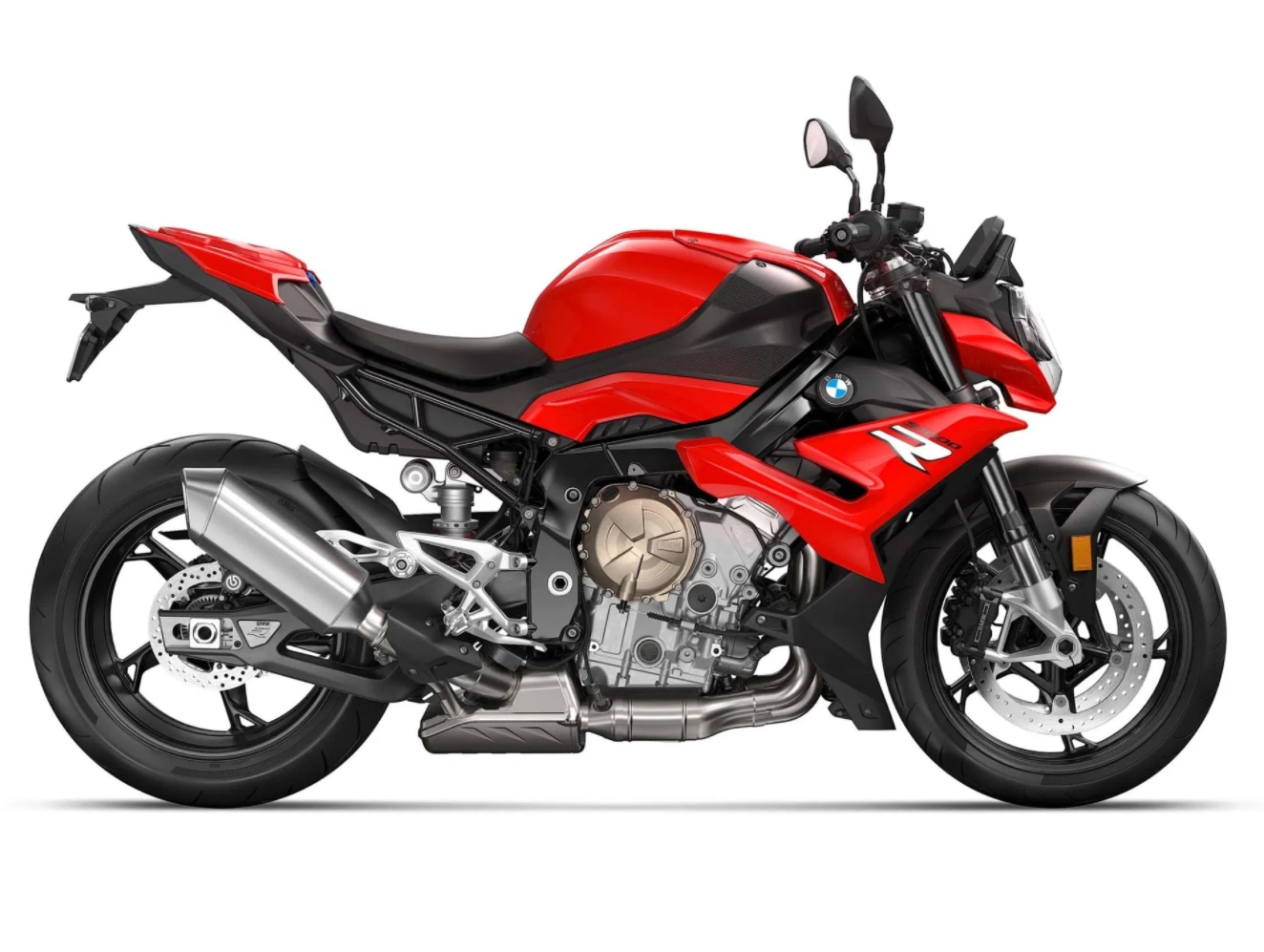
BMW S1000R 2014 — Specs & Overview
Hyper-naked roadster — 170 HP, specs, price, 0-60 & buyer's guide
The BMW S1000R is a hyper-naked roadster with a 999cc inline-4 (BMW ShiftCam). From 2025 it makes 170 HP and 114 Nm, with a 199 kg wet weight (196 kg with M package). Produced since 2014 across three generations. This guide covers specs, price by year, top speed, 0-60, weight, S1000RR / MT-10 comparisons, common problems, and buying advice.
Key features
Technical specifications
Engine
Transmission
Chassis
Electronics
Other
BMW S1000R at a glance: specs, weight, top speed (2025)
- Engine: 999cc liquid-cooled inline-4 (BMW ShiftCam)
- Power: 170 HP @ 11,000 rpm (2025+; ~165 HP for 2021–2024)
- Torque: ~84 lb-ft @ 9,250 rpm
- Wet weight: 199 kg (438.7 lb); 196 kg with M package
- Top speed: ~155 mph (250 km/h)
- Years produced: 2014–present (3 generations)
- Category: Hyper-naked roadster / streetfighter
- Closely related: BMW S1000RR (full-fairing sportbike, same engine platform)
Engine displacement, power, and torque are typical figures for the 2021+ generation; verify exact specs from BMW Motorrad official sources before publishing.
BMW S1000R history: three generations since 2014
The BMW S1000R was introduced in 2014 as the naked counterpart to BMW's flagship S1000RR sportbike. Since then it has gone through three distinct generations.
Gen 1 (2014–2016)
Original launch in 2014. Based on the 2010+ S1000RR platform with 999cc inline-4 producing ~160 HP. Initial design featured the asymmetric headlight arrangement that became a BMW signature.
Gen 2 (2017–2020)
Mid-cycle facelift with updated electronics, Euro 4 compliance, slightly revised ergonomics, and detail design refresh. Power remained around 160 HP.
Gen 3 (2021–present)
Major redesign launched in 2020 for the 2021 model year. New frame, new swingarm, redesigned bodywork, BMW ShiftCam variable valve timing on the engine (now producing 170 HP (2025+)), and significantly updated electronics. Current 2025+ models continue this generation with software and color updates.
BMW S1000R specs: three generations compared
| Spec | Gen 1 (2014–2016) | Gen 2 (2017–2020) | Gen 3 (2021+) |
|---|---|---|---|
| Engine | 999cc inline-4 | 999cc inline-4 | 999cc inline-4 |
| Valve timing | Fixed | Fixed | ShiftCam variable |
| Power (hp) | ~160 | ~160 | ~165 |
| Torque (lb-ft) | ~82 | ~82 | ~84 |
| Wet weight | ~451 lb (204 kg) | ~440 lb (200 kg) | ~432 lb (196 kg) |
| Riding modes | Rain, Road, Sport, Slick | Rain, Road, Dynamic, Dynamic Pro | Rain, Road, Dynamic, Dynamic Pro (with optional Track mode) |
| Traction control | DTC | DTC | DTC + Wheelie Control |
| ABS | Standard | ABS Pro | ABS Pro (cornering) |
| Quick shifter | Optional | Optional | Optional / Standard on M Package |
Gen 3 specs are typical industry figures; verify each cell from BMW Motorrad's official spec sheets before publishing.
BMW S1000R top speed, 0-60, and quarter mile
Stock top speed: approximately 155 mph (250 km/h).
0-60 mph: approximately 3.0 seconds.
Quarter mile: approximately 10.0 seconds.
Performance figures vary based on rider weight, conditions, and test methods. BMW does not publish official performance numbers. Verify against current published instrumented tests from CycleWorld, MotorcyclistOnline, or RevZilla.
Top speed without limiter
The S1000R is electronically limited at ~155 mph. Removing the limiter (closed-course use only) can yield higher top speeds — owner reports run in the 165+ mph range with ECU remapping or aftermarket exhaust.
BMW S1000R price by year
| Year | MSRP (new, USD) | Typical used market value |
|---|---|---|
| 2026 | $15,495 [verify from BMW USA] | Not yet available |
| 2025 | $15,495 [verify] | $13,500–$15,000 |
| 2024 | $15,195 [verify] | $12,500–$14,500 |
| 2023 | $14,995 [verify] | $12,000–$13,500 |
| 2022 | $14,895 [verify] | $11,500–$13,000 |
| 2021 | $14,895 [verify — Gen 3 launch] | $10,500–$12,500 |
| 2020 (Gen 2) | ~$14,000 [verify] | $9,500–$11,500 |
| 2017–2019 (Gen 2) | ~$13,000–$14,000 [verify] | $7,500–$10,000 |
| 2014–2016 (Gen 1) | ~$13,000–$14,000 [verify] | $6,000–$9,000 |
All MSRP and used prices are general market estimates; verify against current BMW Motorrad USA pricing and current marketplace listings (Autotrader, CycleTrader) before publishing.
BMW S1000R vs BMW S1000RR: naked vs full-fairing
The S1000R and S1000RR share the same engine platform but are built for different purposes. Riders comparing these two BMW liter-class bikes usually face this decision.
| Spec | BMW S1000R | BMW S1000RR |
|---|---|---|
| Engine | 999cc ShiftCam inline-4 | 999cc ShiftCam inline-4 |
| Power (hp) | ~165 | ~205 (M package: ~212) |
| Category | Hyper-naked roadster | Sportbike / superbike |
| Weight (wet) | ~432 lb (196 kg) | ~434 lb (197 kg) |
| Ergonomics | Upright, handlebar | Tucked, clip-on handlebars |
| Fairing | None (naked) | Full fairing |
| Best for | Street riding, canyon carving, daily rideable sport | Track days, racing, full performance |
| Typical MSRP | $15,495 [verify] | $18,995 [verify] |
Which one should you buy?
- S1000R if you want a high-performance liter-class bike that's actually usable on the street, with comfortable ergonomics, no fairing, and most of the S1000RR's power.
- S1000RR if you have a track license or want the full superbike experience — higher power, full fairing, aggressive ergonomics.
Read the full BMW S1000RR buyer's guide for a deeper comparison.
BMW S1000R vs other hyper-nakeds
The S1000R competes in the liter-class hyper-naked segment alongside:
- Yamaha MT-10 — crossplane triple, similar power, ~$14,000 MSRP
- Kawasaki Z900 SE — inline-4, lower power (~125 HP), ~$10,500 MSRP
- Ducati Streetfighter V4 — V4, ~200 HP, ~$20,000+ MSRP
- Aprilia Tuono V4 1100 — V4, ~175 HP, ~$15,500 MSRP
- KTM 1290 Super Duke R — V-twin, ~180 HP, ~$18,500 MSRP
Competitor MSRPs are general market estimates; verify against current manufacturer pricing.
Common BMW S1000R problems
Before buying any generation, check these common S1000R ownership issues reported by long-term testers and owners:
- Gen 1 (2014–2016) cam chain tensioner: some early models had cam chain tensioner issues. Verify the unit has the updated tensioner.
- Gen 2 (2017–2020) throttle response: early Gen 2 models had a known throttle "hiccup" at low RPM, addressed by BMW software updates.
- Gen 3 (2021+) quickshifter on early production: some 2021–2022 models had quickshifter calibration quirks at lower RPM, fixed via ECU updates.
- Aftermarket exhaust tuning: stock map assumes stock exhaust. Aftermarket slip-ons without a re-map can cause running lean.
- Tire wear: the S1000R's 165 HP + sport geometry = faster rear-tire wear than typical naked bikes.
- Service intervals: BMW specifies 6,000-mile valve clearance checks on Gen 1–2, longer on Gen 3. Factor into ownership cost.