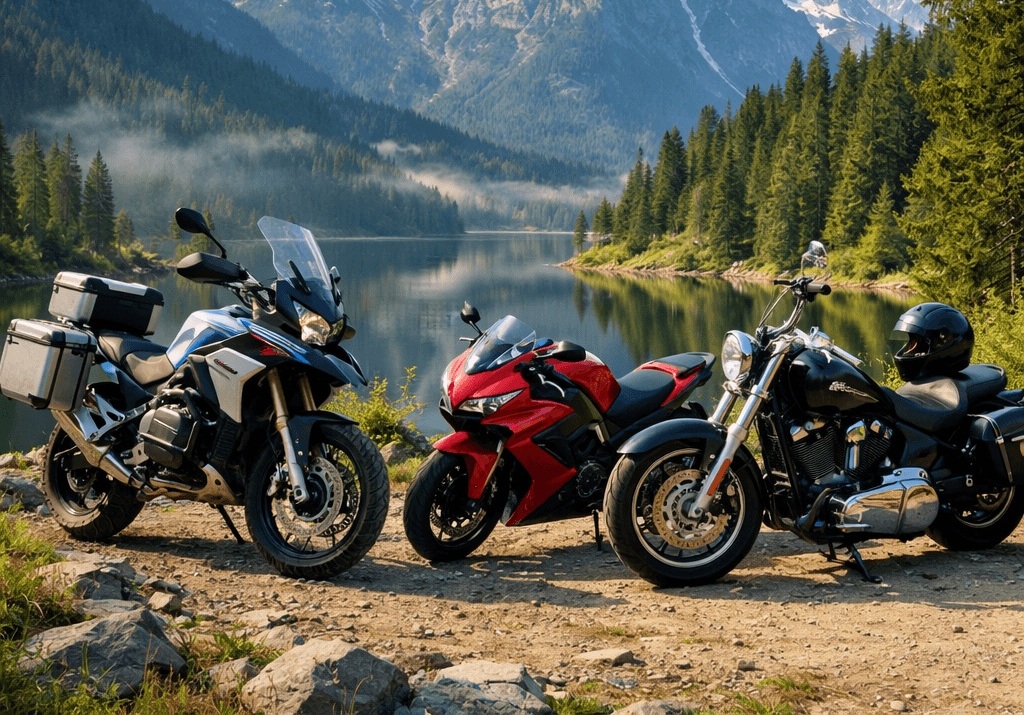
What are the key differences between the latest flagship touring models from BMW and Honda released for the 2026 season?
The motorcycle touring segment continues to evolve with manufacturers pushing the boundaries of comfort, technology, and performance for long-distance riders. For the 2026 season, both BMW and Honda have refined their flagship touring platforms, offering distinct approaches to what makes the ultimate mile-muncher. While Honda emphasizes supreme refinement and effortless long-haul luxury with its venerable Gold Wing, BMW focuses on dynamic performance blended with advanced rider aids in models like the R 1300 RT and K 1600 series.
Understanding these differences is crucial for riders investing in a premium touring motorcycle that will serve them for years. This comprehensive guide examines engine architecture, chassis dynamics, comfort features, technology integration, and practical considerations between these leading contenders. Whether you prioritize silky smoothness or spirited performance, the 2026 offerings from both brands present compelling yet fundamentally different propositions. By the end of this analysis, you'll have a clear framework for deciding which philosophy aligns with your touring aspirations.
At motohubs, we regularly evaluate flagship models to help enthusiasts make informed purchasing decisions based on real-world riding requirements rather than marketing claims alone.
Engine Specifications and Performance Characteristics
The heart of any touring motorcycle is its powerplant, and the 2026 flagship models from BMW and Honda showcase dramatically different engineering philosophies. Honda continues with its signature horizontally opposed six-cylinder engine, while BMW offers both its innovative ShiftCam boxer-twin and refined inline-six configurations across its touring range.
Honda Gold Wing's Flat-Six Engine Architecture
The Honda Gold Wing for 2026 retains its proven 1,833cc horizontally opposed six-cylinder engine, delivering approximately 90 horsepower. This configuration has been a hallmark of the model for decades, prized for its exceptional smoothness and low vibrations. The engine's design inherently cancels primary vibrations, resulting in a turbine-like power delivery that makes highway cruising exceptionally relaxed.
According to the official specifications, "The Honda Gold Wing uses a horizontally opposed six‑cylinder 1,833cc engine with a seven‑speed Dual Clutch Transmission option, and focuses on long‑distance comfort with features like an electrically adjustable windscreen, integrated luggage, Apple CarPlay/Android Auto connectivity, and advanced rider aids such as selectable ride modes and walking/creep mode for low‑speed maneuvering." This powertrain excels in providing seamless power across a broad rpm range, making it ideal for riders who value refinement over outright acceleration.
The inclusion of the optional Dual Clutch Transmission (DCT) represents a significant advantage for many touring enthusiasts. This automated system eliminates the need for manual clutch operation while offering both fully automatic and manual shift modes via handlebar-mounted paddles. For 2026, Honda has further refined the DCT algorithms to provide even smoother transitions during highway passing maneuvers and in varying load conditions typical of fully loaded touring.
BMW's Boxer-Twin and Inline-Six Options
In contrast, BMW's 2026 touring lineup features two distinct engine approaches. The R 1300 RT utilizes a 1,300cc ShiftCam boxer-twin engine producing nearly 120 horsepower. This variable valve timing technology allows the engine to optimize both low-end torque and high-rpm power, resulting in a more versatile performance envelope than traditional designs.
The larger K 1600 models continue with their inline-six configuration, providing an exceptionally smooth power delivery similar to the Gold Wing but with significantly more displacement and output. These engines are particularly noted for their linear power characteristics and distinctive sound that many riders find engaging during long journeys.
The comparative review highlights these differences clearly: "In this comparison, the Honda Gold Wing Tour DCT uses an 1,833cc flat‑six making around 90 horsepower and weighing about 845 lb, while the BMW R 1300 RT employs a 1,300cc ShiftCam boxer twin producing nearly 120 horsepower at roughly 645 lb, highlighting a clear difference in engine character, power‑to‑weight ratio, and overall agility between the two flagship tourers." This substantial disparity in power-to-weight ratio gives the BMW models a noticeably more dynamic character, particularly when navigating twisty mountain passes or executing overtaking maneuvers on two-lane highways.
Power Delivery and Riding Experience
The fundamental difference in engine character translates directly to riding experience. The Honda Gold Wing's six-cylinder setup provides an almost car-like smoothness that many riders describe as hypnotic on extended highway runs. Power builds progressively without abrupt transitions, making it exceptionally easy to maintain cruising speeds with minimal rider input.
BMW's boxer-twin in the R 1300 RT, however, delivers power with more urgency. The ShiftCam technology allows the engine to breathe more efficiently at higher rpm, providing stronger mid-range acceleration that can be advantageous when navigating varied terrain or dealing with unexpected traffic situations. The K 1600's inline-six strikes a balance, offering smoothness approaching the Gold Wing while maintaining stronger overall performance figures.
Fuel efficiency also varies between these approaches. The Honda typically achieves slightly better mileage on long highway stretches due to its optimized cruising efficiency, while the BMW models may offer advantages in varied riding conditions where their higher power outputs allow for more efficient use of higher gears.
Technical Innovations in Engine Management
Both manufacturers have incorporated advanced engine management systems for 2026. Honda's system focuses on seamless integration with the DCT and ride mode selections, automatically adjusting throttle response and power delivery based on selected parameters. BMW has enhanced its engine control units to work in harmony with adaptive suspension and rider aid systems, creating a more integrated riding experience.
These engine differences represent more than just specifications—they define the fundamental character of each motorcycle. Riders who prefer a relaxed, almost meditative riding style will likely gravitate toward the Honda, while those seeking more engagement and performance will find the BMW models more aligned with their preferences.
Chassis Design, Weight Distribution and Handling Dynamics
Beyond the engine, the chassis architecture of these flagship touring models reveals significant philosophical differences between BMW and Honda